 ®
®UV・熱剥離および再作業対応フィルム
工程内の一時固定用UV・熱剥離フィルムと、製品使用期間中の接着や修理に用いる引き伸ばし・アルコール・加熱による剥離テープ。基材、保持荷重、剥離方法、除去するタイミングに応じて選定します。
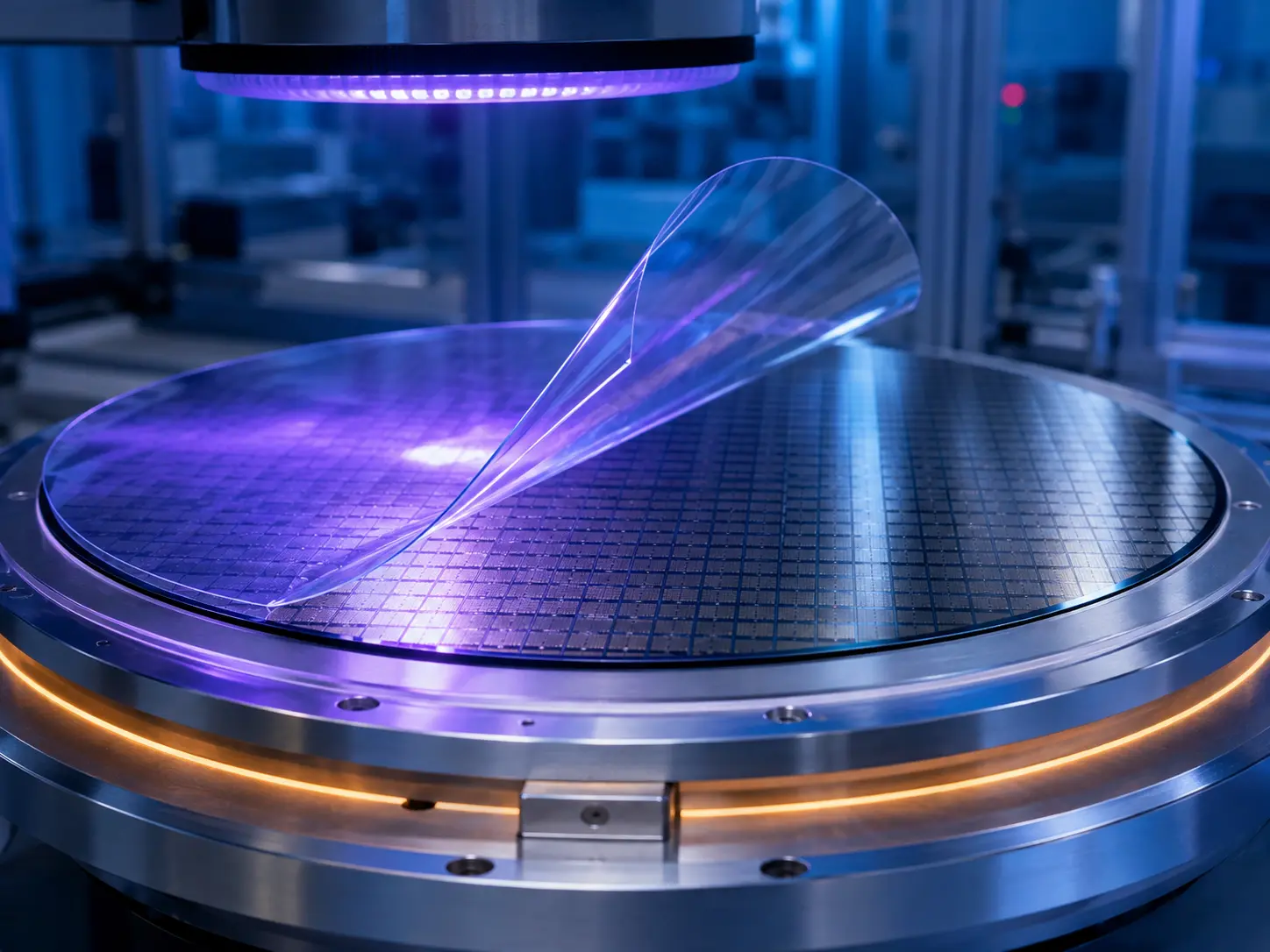
材料積層構造の内容.
各層は機能順に示しており、正確な構成はグレードごとに異なります。
- 01PET, PO, TPU, carrierless or foam support selected for stiffness and conformity
- 02UV-responsive, heat-expandable, thermal-release, stretch-release or alcohol-release adhesive
- 03Optional PET or paper release liner
- 04Activation and removal step controlled in the customer process flow
技術選定用の個別グレード.
各 ECLEAR モデルは、異なる材料の役割と構成を示します。製造元グレードとの対応情報は、トレーサビリティーのため ECLEAR 製品マスターで管理されます。
Controlled release for process handling and repairable assemblies.
01UV-debonding films retain parts during cutting or handling, then reduce adhesion after a defined ultraviolet spectrum and dose. Substrate transmission, shadow zones, lamp aging and dose uniformity can create different release behavior across the same part.
02Thermal-release films use a grade-specific temperature and dwell to trigger clean separation. Heating rate, actual interface temperature, pressure and part thermal mass must be controlled rather than relying only on an oven set point.
03A successful debonding film balances holding power with removability. Repairable assembly tapes must maintain the required bond throughout service before the specified rework event. Residue, part movement, edge lift and substrate damage are evaluated before and after storage and process exposure.
用途を基準に評価する性能.
利点は、対象基材、工程、最終アセンブリで評価します。
Named UV-release grades across multiple carrier thicknesses and tack levels
Lined and linerless thermal-release films for different handling routes
Reworkable PET and foam tapes for electronics assembly
Clear separation of activation mechanism, temperature, dose and removal role
材料定義から量産積層構造の認定まで.
認定では、材料、加工経路、顧客の生産ラインを一体として確認します。
Record substrate, process force, dwell, temperature and required dimensional stability.
Match UV spectrum/dose or thermal profile to the part and equipment.
Measure shadow, edge, overlap and local-temperature conditions across the assembly.
Check peel force, residue, damage and throughput after realistic aging.
仕様承認前に収集すべき検証データ.
実使用を代表する基材、工程条件、エージング順序を使用してください。
- Pre-activation adhesion and shear stability through the full process
- Post-activation peel using a defined UV dose or thermal profile
- Shadow-zone, edge and overlap release uniformity
- Residue, outgassing, contamination and substrate-damage inspection
- Aged release after transport, storage and environmental exposure
数値には試験方法と承認済み改訂版が必要です.
代表値は選定の参考であり、管理規格は承認済み TDS に従います。
代表値は保証規格ではありません。最終基準は承認済みECLEAR TDSとお客様の検証結果に従います。
ライン試験前に技術者が確認する質問.
サンプル依頼前に、材料の役割、界面、工程範囲を明確にしてください。
Is total UV dose enough to define debonding?+
No. Spectrum, irradiance, exposure time, lamp distance, substrate transmission and shadow geometry all influence the reaction. They must be recorded with the dose.
Can a thermal-release grade be selected from temperature alone?+
No. The actual interface temperature, dwell, pressure, heating rate, substrate and removal timing are part of the qualification window.
Can ECLEAR recommend a grade from an application description alone?+
A first shortlist is possible, but a production recommendation requires the substrate, layer construction, equipment, process sequence, test method and acceptance criteria. ECLEAR normally moves from requirement definition to laboratory matching, samples, line trial and a frozen approved specification.
Are the values shown on this page guaranteed specifications?+
No. Website values and constructions are selection guidance. Guaranteed limits, test conditions, packaging and shelf life are controlled only by the latest ECLEAR-approved TDS, quality agreement and customer qualification record.
このプラットフォームを評価する用途.
各用途で、積層構造全体の適合性とライン検証が必要です。
管理すべき工程パラメータ.
一つの公称条件だけでなく、工程範囲全体を記録してください。
- Define the exact activation source, dose or time-temperature profile.
- Measure shaded edges, masked zones and heat-sink areas for incomplete release.
- Control lamination pressure, dwell, carrier strain and stripping geometry.
- Verify residue, part distortion and post-release surface cleanliness.
選定に必要な情報.
これらの情報により、ECLEAR はグレードと検証計画を絞り込めます。
- Q1What initial holding force is needed before activation?
- Q2Which UV wavelength/dose or thermal cycle is available on the line?
- Q3Is the substrate flat, curved, porous, fragile or temperature-sensitive?
- Q4Must the adhesive release once, reversibly or by mechanical stretch?
計画的な試験で早期に確認すべきリスク.
早期の不具合確認により、量産拡大のリスクと誤った材料比較を低減します。
Incomplete UV exposure in shadow zones
Thermal damage or distortion outside the substrate window
Residue after excessive dwell or unapproved aging
Confusing a reversible repair tape with an irreversible drop-off film
管理された技術文書.
選定した ECLEAR グレードと用途に対応する最新版を請求してください。
代表構成と用途概念は、材料選定のための情報です。供給状況、構成、性能、工程条件はグレードごとに異なり、最新の ECLEAR 承認 TDS、用途試験、および顧客の最終認定に従います。
関連材料システム.
同じ積層構造または工程で本製品と相互作用する周辺材料を確認してください。
単一材料ではなく、積層構造全体を検証してください.
適切な提案のため、基材、構成、工程、合格基準をご提示ください。