 ®
®Màng tách dính bằng UV, nhiệt và phục vụ tái gia công
Màng tách dính bằng UV và nhiệt để cố định tạm thời trong quy trình, cùng băng keo tách bằng kéo giãn, cồn và nhiệt để dán kết trong thời gian sử dụng và phục vụ sửa chữa. Chọn theo vật liệu nền, tải trọng giữ, phương pháp tách dính và thời điểm tháo bỏ.
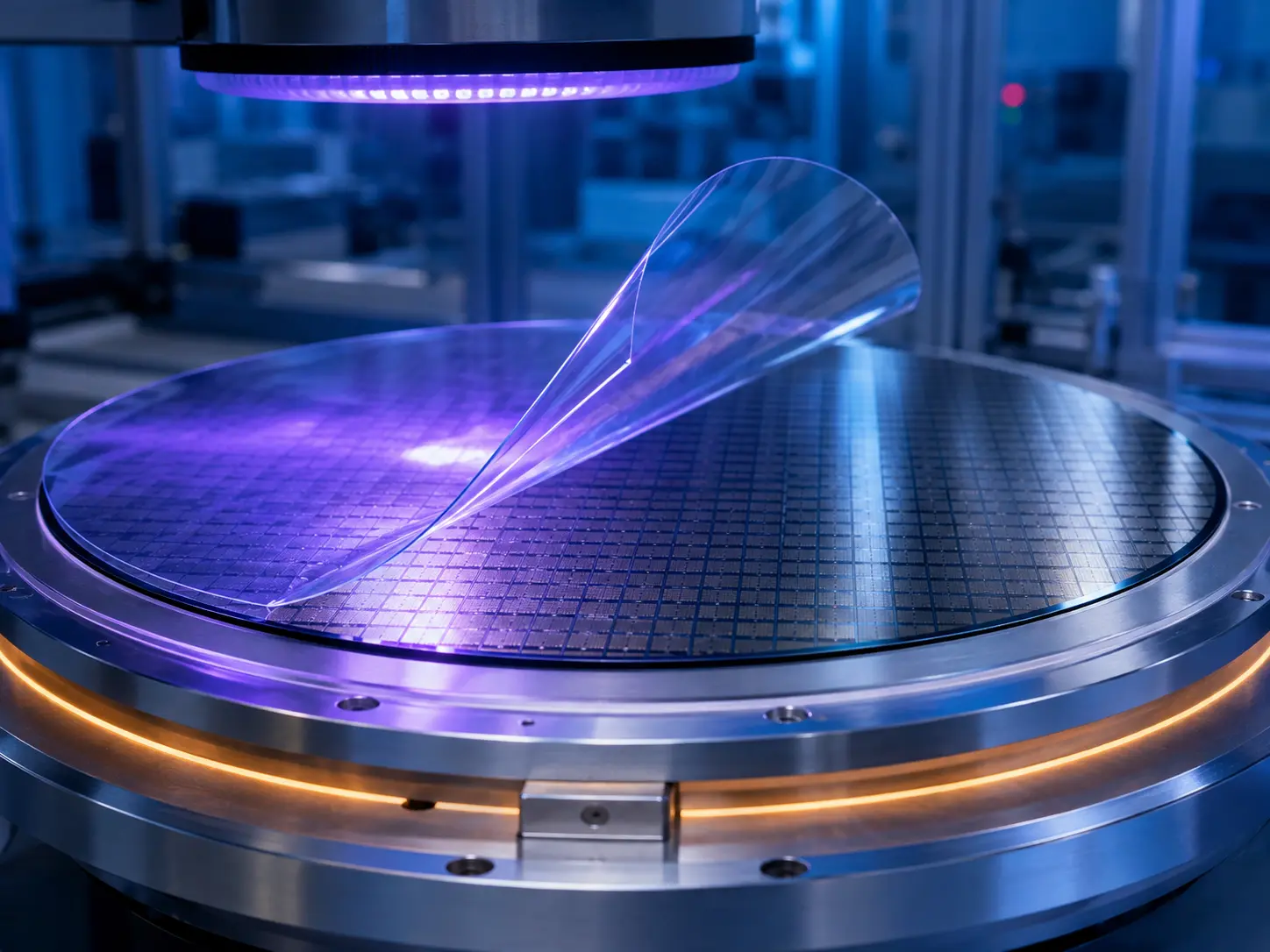
Thành phần của cấu trúc lớp vật liệu.
Các lớp được trình bày theo thứ tự chức năng; cấu trúc chính xác phụ thuộc từng mã.
- 01PET, PO, TPU, carrierless or foam support selected for stiffness and conformity
- 02UV-responsive, heat-expandable, thermal-release, stretch-release or alcohol-release adhesive
- 03Optional PET or paper release liner
- 04Activation and removal step controlled in the customer process flow
Các mã vật liệu riêng biệt phục vụ lựa chọn kỹ thuật.
Mỗi mã ECLEAR đại diện cho một vai trò vật liệu và cấu trúc riêng. Đối chiếu mã sản xuất được kiểm soát trong dữ liệu sản phẩm gốc của ECLEAR để bảo đảm truy xuất.
Controlled release for process handling and repairable assemblies.
01UV-debonding films retain parts during cutting or handling, then reduce adhesion after a defined ultraviolet spectrum and dose. Substrate transmission, shadow zones, lamp aging and dose uniformity can create different release behavior across the same part.
02Thermal-release films use a grade-specific temperature and dwell to trigger clean separation. Heating rate, actual interface temperature, pressure and part thermal mass must be controlled rather than relying only on an oven set point.
03A successful debonding film balances holding power with removability. Repairable assembly tapes must maintain the required bond throughout service before the specified rework event. Residue, part movement, edge lift and substrate damage are evaluated before and after storage and process exposure.
Hiệu năng được đánh giá theo ứng dụng.
Lợi ích được đánh giá trên nền vật liệu, quy trình và cụm lắp ráp cuối cùng dự kiến.
Named UV-release grades across multiple carrier thicknesses and tack levels
Lined and linerless thermal-release films for different handling routes
Reworkable PET and foam tapes for electronics assembly
Clear separation of activation mechanism, temperature, dose and removal role
Từ định nghĩa vật liệu đến cấu trúc sản xuất được phê duyệt.
Quá trình phê duyệt liên kết vật liệu, phương án gia công và dây chuyền của khách hàng.
Record substrate, process force, dwell, temperature and required dimensional stability.
Match UV spectrum/dose or thermal profile to the part and equipment.
Measure shadow, edge, overlap and local-temperature conditions across the assembly.
Check peel force, residue, damage and throughput after realistic aging.
Bằng chứng cần thu thập trước khi ban hành quy cách.
Sử dụng nền vật liệu, điều kiện quy trình và chuỗi lão hóa đại diện.
- Pre-activation adhesion and shear stability through the full process
- Post-activation peel using a defined UV dose or thermal profile
- Shadow-zone, edge and overlap release uniformity
- Residue, outgassing, contamination and substrate-damage inspection
- Aged release after transport, storage and environmental exposure
Mọi giá trị đều cần phương pháp và phiên bản được phê duyệt.
Giá trị điển hình hỗ trợ lựa chọn; giới hạn kiểm soát lấy từ TDS đã phê duyệt.
Giá trị điển hình không phải là quy cách bảo đảm. Giới hạn cuối cùng tuân theo TDS ECLEAR đã duyệt và kết quả thẩm định của khách hàng.
Các câu hỏi kỹ thuật trước khi chạy thử dây chuyền.
Xác định vai trò vật liệu, bề mặt tiếp xúc và cửa sổ quy trình trước khi yêu cầu mẫu.
Is total UV dose enough to define debonding?+
No. Spectrum, irradiance, exposure time, lamp distance, substrate transmission and shadow geometry all influence the reaction. They must be recorded with the dose.
Can a thermal-release grade be selected from temperature alone?+
No. The actual interface temperature, dwell, pressure, heating rate, substrate and removal timing are part of the qualification window.
Can ECLEAR recommend a grade from an application description alone?+
A first shortlist is possible, but a production recommendation requires the substrate, layer construction, equipment, process sequence, test method and acceptance criteria. ECLEAR normally moves from requirement definition to laboratory matching, samples, line trial and a frozen approved specification.
Are the values shown on this page guaranteed specifications?+
No. Website values and constructions are selection guidance. Guaranteed limits, test conditions, packaging and shelf life are controlled only by the latest ECLEAR-approved TDS, quality agreement and customer qualification record.
Các lĩnh vực đánh giá nền tảng này.
Mỗi ứng dụng vẫn cần kiểm tra tính tương thích của toàn bộ cấu trúc và xác nhận trên dây chuyền.
Các thông số cần kiểm soát.
Ghi lại toàn bộ cửa sổ quy trình, không chỉ một giá trị danh nghĩa.
- Define the exact activation source, dose or time-temperature profile.
- Measure shaded edges, masked zones and heat-sink areas for incomplete release.
- Control lamination pressure, dwell, carrier strain and stripping geometry.
- Verify residue, part distortion and post-release surface cleanliness.
Thông tin chúng tôi cần.
Các dữ liệu này giúp ECLEAR thu hẹp mã vật liệu và kế hoạch xác nhận.
- Q1What initial holding force is needed before activation?
- Q2Which UV wavelength/dose or thermal cycle is available on the line?
- Q3Is the substrate flat, curved, porous, fragile or temperature-sensitive?
- Q4Must the adhesive release once, reversibly or by mechanical stretch?
Những rủi ro cần được phát hiện sớm trong thử nghiệm có kiểm soát.
Kiểm tra lỗi sớm giúp giảm rủi ro mở rộng sản xuất và tránh so sánh vật liệu sai lệch.
Incomplete UV exposure in shadow zones
Thermal damage or distortion outside the substrate window
Residue after excessive dwell or unapproved aging
Confusing a reversible repair tape with an irreversible drop-off film
Tài liệu kỹ thuật được kiểm soát.
Yêu cầu phiên bản hiện hành cho mã ECLEAR và ứng dụng đã chọn.
Cấu trúc điển hình và khái niệm ứng dụng chỉ nhằm hỗ trợ lựa chọn vật liệu. Tình trạng cung ứng, cấu trúc, hiệu năng và điều kiện quy trình phụ thuộc từng mã và phải tuân theo TDS ECLEAR mới nhất đã được phê duyệt, thử nghiệm ứng dụng và phê duyệt cuối cùng của khách hàng.
Các hệ vật liệu liên quan.
Xem xét các vật liệu lân cận tương tác với sản phẩm này trong cùng cấu trúc hoặc quy trình.
Xác nhận toàn bộ cấu trúc, không chỉ một vật liệu riêng lẻ.
Cung cấp nền vật liệu, cấu trúc, quy trình và tiêu chí chấp nhận để nhận khuyến nghị phù hợp.