 ®
®Film Pelepasan UV, Termal dan untuk Pengerjaan Ulang
Film pelepasan UV dan termal untuk fiksasi sementara selama proses, serta pita perekat yang dilepas dengan peregangan, alkohol atau panas untuk perekatan selama masa pakai dan perbaikan. Pilih berdasarkan substrat, beban penahanan, metode pelepasan dan waktu pelepasan.
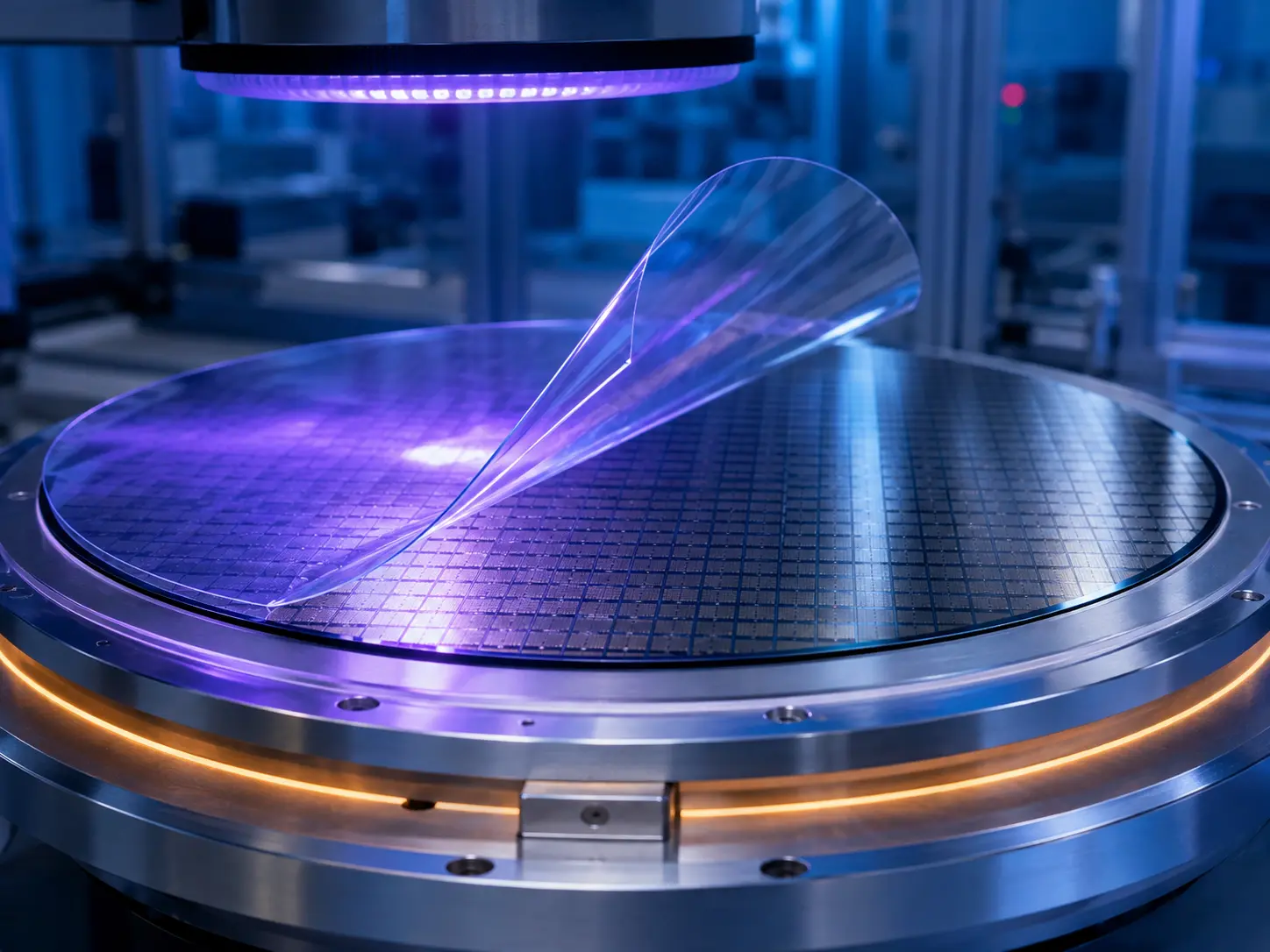
Isi struktur berlapis material.
Lapisan ditampilkan menurut urutan fungsi; konstruksi tepatnya bergantung pada grade.
- 01PET, PO, TPU, carrierless or foam support selected for stiffness and conformity
- 02UV-responsive, heat-expandable, thermal-release, stretch-release or alcohol-release adhesive
- 03Optional PET or paper release liner
- 04Activation and removal step controlled in the customer process flow
Grade bernama untuk pemilihan teknis.
Setiap model ECLEAR mewakili peran material dan konstruksi yang berbeda. Padanan grade manufaktur dikendalikan dalam data induk produk ECLEAR untuk ketertelusuran.
Controlled release for process handling and repairable assemblies.
01UV-debonding films retain parts during cutting or handling, then reduce adhesion after a defined ultraviolet spectrum and dose. Substrate transmission, shadow zones, lamp aging and dose uniformity can create different release behavior across the same part.
02Thermal-release films use a grade-specific temperature and dwell to trigger clean separation. Heating rate, actual interface temperature, pressure and part thermal mass must be controlled rather than relying only on an oven set point.
03A successful debonding film balances holding power with removability. Repairable assembly tapes must maintain the required bond throughout service before the specified rework event. Residue, part movement, edge lift and substrate damage are evaluated before and after storage and process exposure.
Kinerja yang dinilai berdasarkan aplikasi.
Manfaat dievaluasi pada substrat, proses, dan rakitan akhir yang dituju.
Named UV-release grades across multiple carrier thicknesses and tack levels
Lined and linerless thermal-release films for different handling routes
Reworkable PET and foam tapes for electronics assembly
Clear separation of activation mechanism, temperature, dose and removal role
Dari definisi material hingga struktur produksi yang terkualifikasi.
Kualifikasi menghubungkan material, jalur konversi, dan lini produksi pelanggan.
Record substrate, process force, dwell, temperature and required dimensional stability.
Match UV spectrum/dose or thermal profile to the part and equipment.
Measure shadow, edge, overlap and local-temperature conditions across the assembly.
Check peel force, residue, damage and throughput after realistic aging.
Bukti yang dikumpulkan sebelum spesifikasi dirilis.
Gunakan substrat, kondisi proses, dan urutan penuaan yang mewakili penggunaan sebenarnya.
- Pre-activation adhesion and shear stability through the full process
- Post-activation peel using a defined UV dose or thermal profile
- Shadow-zone, edge and overlap release uniformity
- Residue, outgassing, contamination and substrate-damage inspection
- Aged release after transport, storage and environmental exposure
Setiap nilai memerlukan metode dan revisi yang disetujui.
Nilai tipikal membantu pemilihan; batas terkendali berasal dari TDS yang disetujui.
Nilai tipikal bukan spesifikasi. Batas akhir tunduk pada TDS ECLEAR yang disetujui dan validasi pelanggan.
Pertanyaan teknis sebelum uji coba lini.
Tentukan peran material, antarmuka, dan jendela proses sebelum meminta sampel.
Is total UV dose enough to define debonding?+
No. Spectrum, irradiance, exposure time, lamp distance, substrate transmission and shadow geometry all influence the reaction. They must be recorded with the dose.
Can a thermal-release grade be selected from temperature alone?+
No. The actual interface temperature, dwell, pressure, heating rate, substrate and removal timing are part of the qualification window.
Can ECLEAR recommend a grade from an application description alone?+
A first shortlist is possible, but a production recommendation requires the substrate, layer construction, equipment, process sequence, test method and acceptance criteria. ECLEAR normally moves from requirement definition to laboratory matching, samples, line trial and a frozen approved specification.
Are the values shown on this page guaranteed specifications?+
No. Website values and constructions are selection guidance. Guaranteed limits, test conditions, packaging and shelf life are controlled only by the latest ECLEAR-approved TDS, quality agreement and customer qualification record.
Bidang evaluasi platform ini.
Setiap aplikasi tetap memerlukan kompatibilitas seluruh struktur dan validasi lini.
Parameter yang harus dikendalikan.
Catat seluruh jendela proses, bukan hanya satu pengaturan nominal.
- Define the exact activation source, dose or time-temperature profile.
- Measure shaded edges, masked zones and heat-sink areas for incomplete release.
- Control lamination pressure, dwell, carrier strain and stripping geometry.
- Verify residue, part distortion and post-release surface cleanliness.
Informasi yang kami perlukan.
Data ini membantu ECLEAR mempersempit grade dan rencana validasi.
- Q1What initial holding force is needed before activation?
- Q2Which UV wavelength/dose or thermal cycle is available on the line?
- Q3Is the substrate flat, curved, porous, fragile or temperature-sensitive?
- Q4Must the adhesive release once, reversibly or by mechanical stretch?
Hal yang harus terungkap lebih awal dalam uji coba yang disiplin.
Pemeriksaan kegagalan dini mengurangi risiko peningkatan skala dan perbandingan material yang keliru.
Incomplete UV exposure in shadow zones
Thermal damage or distortion outside the substrate window
Residue after excessive dwell or unapproved aging
Confusing a reversible repair tape with an irreversible drop-off film
Dokumen teknis terkendali.
Minta revisi terbaru untuk grade ECLEAR dan aplikasi yang dipilih.
Konstruksi tipikal dan konsep aplikasi diberikan hanya untuk pemilihan material. Ketersediaan, struktur, kinerja, dan kondisi proses bergantung pada grade serta tunduk pada TDS ECLEAR terbaru yang disetujui, pengujian aplikasi, dan kualifikasi akhir pelanggan.
Sistem material terkait.
Tinjau material di sekitarnya yang berinteraksi dengan produk ini dalam struktur atau proses yang sama.
Validasi seluruh struktur, bukan satu material saja.
Bagikan substrat, konstruksi, proses, dan kriteria penerimaan untuk memperoleh rekomendasi yang terarah.