 ®
®EV Battery & Semiconductor Process Materials
Tinjau model ECLEAR, konstruksi material, aplikasi, jendela proses, dan persyaratan validasi untuk keluarga teknis ini.
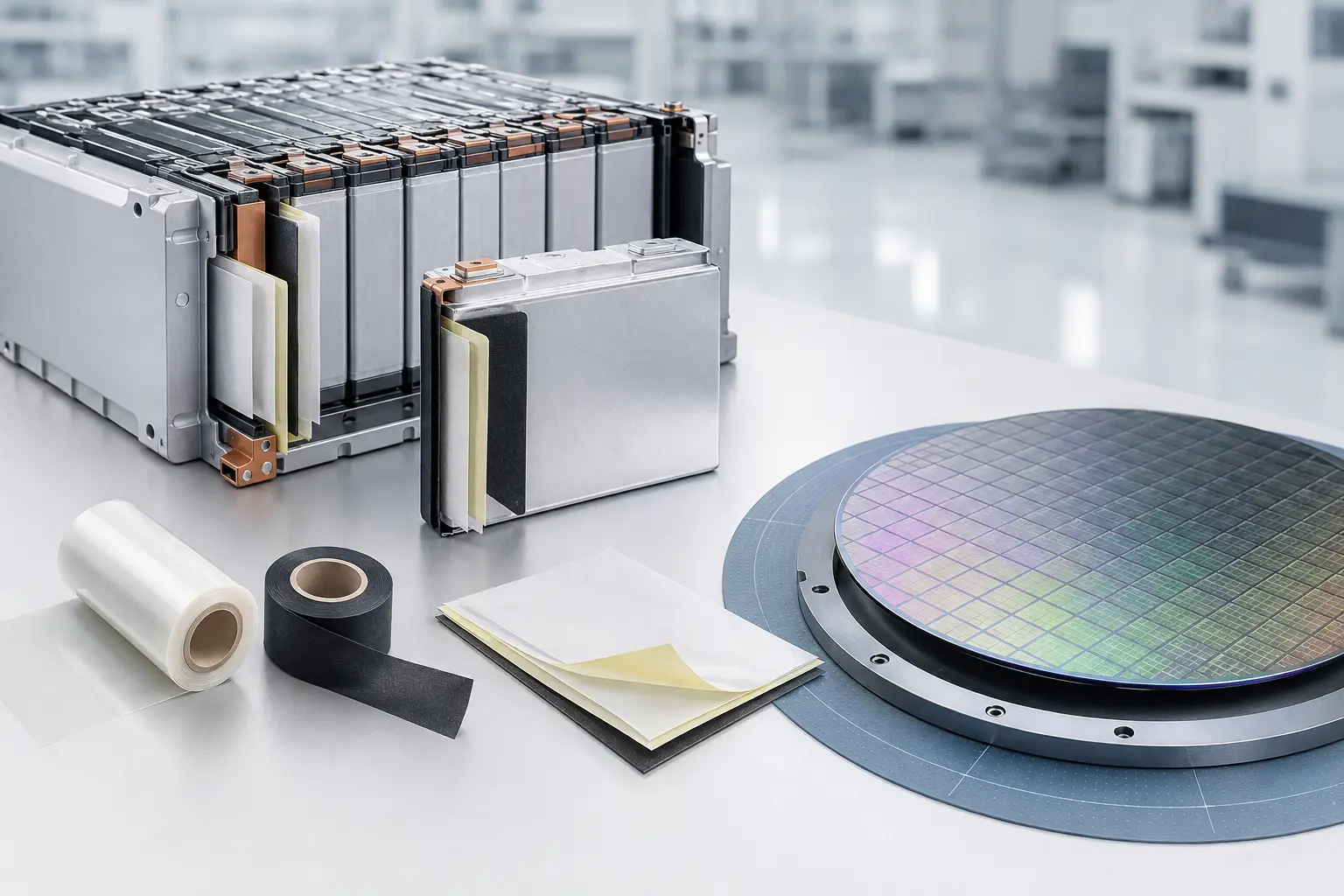
Isi struktur berlapis material.
Lapisan ditampilkan menurut urutan fungsi; konstruksi tepatnya bergantung pada grade.
- 01EV: application-specific insulation, flame-retardant, electrode and termination tapes/films
- 02Fuel cell: release liner / silicone adhesive / PEN film
- 03Semiconductor temporary tapes: carrier / responsive PSA / liner by process
- 04Permanent die-attach film: controlled adhesive stack; other thermal-process films: function and removal step require confirmation
Grade bernama untuk pemilihan teknis.
Setiap model ECLEAR mewakili peran material dan konstruksi yang berbeda. Padanan grade manufaktur dikendalikan dalam data induk produk ECLEAR untuk ketertelusuran.
Material role must remain explicit across energy and wafer processes.
01EV materials may remain permanently as electrical insulation, flame-control support, fixation, cushioning or structural bonding. Semiconductor materials can be temporary process tapes for grinding, de-taping, dicing and singulation, or permanent films such as selected die-attach materials.
02The same words—film, tape or release—can refer to very different lifecycle roles. Each drawing and process flow must state whether the material remains in the product, how it is activated and at which step it is removed.
03Electrical, thermal, chemical and mechanical performance are stack-level properties. Flame, dielectric, electrolyte, UV-release and wafer-pick claims require a defined standard, thickness, process and final-customer qualification.
Kinerja yang dinilai berdasarkan aplikasi.
Manfaat dievaluasi pada substrat, proses, dan rakitan akhir yang dituju.
Clear separation of temporary process films and permanent functional layers
Material families for cell, module, CCS and pack-level needs
Thin PEN-based fuel-cell insulation/fixation option
Process-tape coverage from wafer thinning through package singulation
Dari definisi material hingga struktur produksi yang terkualifikasi.
Kualifikasi menghubungkan material, jalur konversi, dan lini produksi pelanggan.
Permanent insulation/bonding or temporary process support and its removal step.
Set voltage, heat, chemicals, compression, wafer process and activation route.
Freeze thickness, coverage, edge design, dose/heat and equipment settings.
Test electrical, thermal, release, cleanliness and package reliability.
Bukti yang dikumpulkan sebelum spesifikasi dirilis.
Gunakan substrat, kondisi proses, dan urutan penuaan yang mewakili penggunaan sebenarnya.
- Dielectric, insulation and edge-coverage evaluation in the EV assembly
- Thermal, flame and chemical testing to the named standard and thickness
- UV or thermal release including shadow, edge and aged conditions
- Wafer breakage, die fly, pick force, residue, low-k and ESD checks
- DAF bondline, void, warpage, cure and package reliability where applicable
Setiap nilai memerlukan metode dan revisi yang disetujui.
Nilai tipikal membantu pemilihan; batas terkendali berasal dari TDS yang disetujui.
Nilai tipikal bukan spesifikasi. Batas akhir tunduk pada TDS ECLEAR yang disetujui dan validasi pelanggan.
Pertanyaan teknis sebelum uji coba lini.
Tentukan peran material, antarmuka, dan jendela proses sebelum meminta sampel.
How are EV and semiconductor material grades specified?+
ECLEAR publishes the applicable family and named grade where the construction is defined. The current controlled TDS then governs thickness, adhesive or film chemistry, process window, packaging and qualification for the intended line.
Can UV-debonding data be transferred between tools?+
No. Spectrum, irradiance, dose uniformity, substrate transmission and shadow areas can change the release result. The customer tool and full process must be validated.
Can ECLEAR recommend a grade from an application description alone?+
A first shortlist is possible, but a production recommendation requires the substrate, layer construction, equipment, process sequence, test method and acceptance criteria. ECLEAR normally moves from requirement definition to laboratory matching, samples, line trial and a frozen approved specification.
Are the values shown on this page guaranteed specifications?+
No. Website values and constructions are selection guidance. Guaranteed limits, test conditions, packaging and shelf life are controlled only by the latest ECLEAR-approved TDS, quality agreement and customer qualification record.
Bidang evaluasi platform ini.
Setiap aplikasi tetap memerlukan kompatibilitas seluruh struktur dan validasi lini.
Parameter yang harus dikendalikan.
Catat seluruh jendela proses, bukan hanya satu pengaturan nominal.
- Map the material role and removal step in the full process flow.
- Validate electrical, chemical, thermal and aging requirements in the customer stack.
- For process tapes, control dose or thermal activation and shadow/edge zones.
- For permanent films, qualify cure, bondline and package reliability.
Informasi yang kami perlukan.
Data ini membantu ECLEAR mempersempit grade dan rencana validasi.
- Q1Does the material remain in the product or leave during processing?
- Q2What voltage, temperature, flame and chemical environment applies?
- Q3Which process tool, activation route and cycle are used?
- Q4Which regulatory and customer standards control release?
Hal yang harus terungkap lebih awal dalam uji coba yang disiplin.
Pemeriksaan kegagalan dini mengurangi risiko peningkatan skala dan perbandingan material yang keliru.
Publishing family-level claims as a grade specification
Mixing temporary dicing tape with permanent die-attach film
Incomplete release in shadow areas or after thermal aging
Electrical or chemical failure from stack-level incompatibility
Dokumen teknis terkendali.
Minta revisi terbaru untuk grade ECLEAR dan aplikasi yang dipilih.
Konstruksi tipikal dan konsep aplikasi diberikan hanya untuk pemilihan material. Ketersediaan, struktur, kinerja, dan kondisi proses bergantung pada grade serta tunduk pada TDS ECLEAR terbaru yang disetujui, pengujian aplikasi, dan kualifikasi akhir pelanggan.
Sistem material terkait.
Tinjau material di sekitarnya yang berinteraksi dengan produk ini dalam struktur atau proses yang sama.
Validasi seluruh struktur, bukan satu material saja.
Bagikan substrat, konstruksi, proses, dan kriteria penerimaan untuk memperoleh rekomendasi yang terarah.