 ®
®Industrial Bonding Tapes & Adhesive Films
Porównaj modele ECLEAR, budowę materiału, zastosowania, okno procesowe i wymagania walidacyjne tej rodziny technicznej.
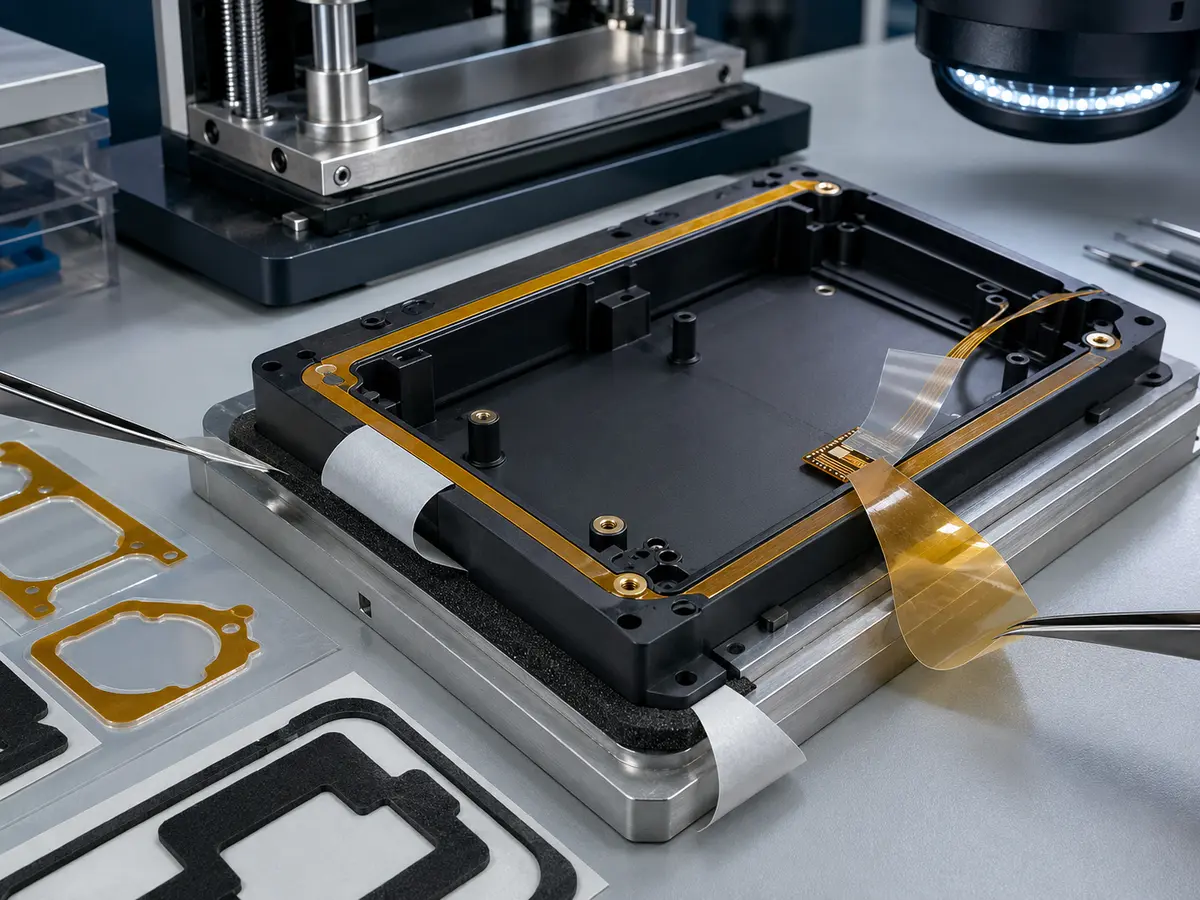
Elementy konstrukcji warstwowej materiału.
Warstwy pokazano w kolejności funkcjonalnej; dokładna konstrukcja zależy od wariantu.
- 01PET, tissue, acrylic foam, PE foam, PU foam or carrierless adhesive platform
- 02Acrylic, silicone, rubber or heat-activated adhesive selected by substrate
- 03Single-, double- or differential-sided construction
- 04Paper or film release liner with controlled converting orientation
Nazwane warianty do doboru technicznego.
Każdy model ECLEAR oznacza odrębną rolę materiału i konstrukcję. Odpowiedniki produkcyjne są kontrolowane w kartotece produktów ECLEAR dla zapewnienia identyfikowalności.
Permanent bonding depends on wet-out, stress distribution and interface durability.
01PET double-sided, carrierless transfer, foam, low-surface-energy, differential and light-blocking tapes solve different assembly problems. Carrier thickness, adhesive chemistry, compressibility, color and release construction must stay linked to a specific ECLEAR grade.
02Initial tack is not the same as durable adhesion. Wet-out develops with pressure, dwell and temperature, while surface energy, contamination, plasticizers, curvature and restoring force determine the long-term interface.
03Hot-melt and thermosetting films add temperature, pressure and cure history to the bond design. The finished bondline is qualified for the actual substrate, geometry, load and environmental cycle.
Wydajność oceniana w kontekście zastosowania.
Korzyści ocenia się na docelowym podłożu, w procesie i w gotowym zespole.
Thin carrierless tapes for conformable and curved-surface bonding
PET and LSE systems for high shear, anti-lifting and PP/PE interfaces
Foam families for cushioning, sealing, repair and foldable-device support
Differential and heat-activated constructions for dissimilar materials
Od definicji materiału do zakwalifikowanej konstrukcji produkcyjnej.
Kwalifikacja łączy materiał, sposób przetwarzania i linię produkcyjną klienta.
Record substrates, bond area, gap, load direction, thickness and rework needs.
Control cleaning, activation, primer and time before lamination.
Set pressure, dwell, alignment and any heat/cure cycle.
Verify peel, shear, creep, lifting, appearance and environmental durability.
Dowody wymagane przed zatwierdzeniem specyfikacji.
Należy użyć reprezentatywnych podłoży, warunków procesu i sekwencji starzenia.
- Peel and dynamic/static shear on both production substrates
- Gap filling, compression recovery and edge lift on actual geometry
- High/low temperature, humidity, thermal cycling and chemical exposure
- Light-blocking, electrical or flame properties where the grade provides that function
- Reworkability, residue and damage where controlled removal is required
Każda wartość wymaga metody i zatwierdzonej rewizji.
Wartości typowe wspierają dobór; kontrolowane limity pochodzą z zatwierdzonej TDS.
Wartości typowe nie są specyfikacją. Ostateczne limity wynikają z zatwierdzonej karty TDS ECLEAR i walidacji klienta.
Pytania inżynierów przed próbą na linii.
Przed pobraniem próbek określ rolę materiału, interfejsy i okno procesu.
Why are similar tape models kept separate?+
A one-letter or thickness change can identify a different carrier, adhesive, side construction, color, release system or application window. ECLEAR does not treat those variants as interchangeable.
Can a high peel value guarantee a reliable device bond?+
No. Peel, shear, creep, impact, gap filling, restoring force and environmental aging represent different failure modes. The joint must be tested in its real geometry.
Can ECLEAR recommend a grade from an application description alone?+
A first shortlist is possible, but a production recommendation requires the substrate, layer construction, equipment, process sequence, test method and acceptance criteria. ECLEAR normally moves from requirement definition to laboratory matching, samples, line trial and a frozen approved specification.
Are the values shown on this page guaranteed specifications?+
No. Website values and constructions are selection guidance. Guaranteed limits, test conditions, packaging and shelf life are controlled only by the latest ECLEAR-approved TDS, quality agreement and customer qualification record.
Obszary oceny tej platformy.
Każde zastosowanie wymaga zgodności pełnego układu warstw i walidacji linii.
Parametry wymagające kontroli.
Zapisuj pełne okno procesu, a nie tylko jedną wartość nominalną.
- Identify both substrates, surface energy, roughness and contamination.
- Set die-cut geometry, liner sequence, pressure, dwell and temperature.
- Test static shear, push-out, spring-back and environmental aging on the assembly.
- Define repair or removal requirements before selecting a permanent adhesive.
Informacje, których potrzebujemy.
Dane te pozwalają ECLEAR zawęzić wariant i plan walidacji.
- Q1Are both bonding surfaces high-energy, silicone, foam, fabric or LSE plastic?
- Q2What bondline thickness, gap filling and cushioning are required?
- Q3What shear, push-out, sealing and anti-repulsion targets apply?
- Q4Must the joint be permanent, reworkable or heat activated?
Co rzetelna próba powinna ujawnić na wczesnym etapie.
Wczesne kontrole awarii zmniejszają ryzyko skalowania i błędnych porównań.
Selecting by peel alone while ignoring shear and spring-back
Using the wrong adhesive face in a differential construction
Poor wet-out on rough, contaminated or low-energy substrates
Uncontrolled liner changes that alter die-cut or lamination behavior
Kontrolowana dokumentacja techniczna.
Poproś o aktualną rewizję dla wybranego wariantu ECLEAR i zastosowania.
Typowe konstrukcje i koncepcje zastosowań służą wyłącznie do doboru materiału. Dostępność, budowa, wydajność i warunki procesu zależą od wariantu oraz podlegają najnowszej zatwierdzonej TDS ECLEAR, testom aplikacyjnym i końcowej kwalifikacji klienta.
Powiązane systemy materiałowe.
Sprawdź sąsiednie materiały współpracujące z tym produktem w tym samym układzie lub procesie.
Waliduj cały układ, a nie pojedynczy materiał.
Przekaż podłoże, konstrukcję, proces i kryteria akceptacji, aby uzyskać trafną rekomendację.