 ®
®Carrier, film di scarto e liner per fustellatura OCA
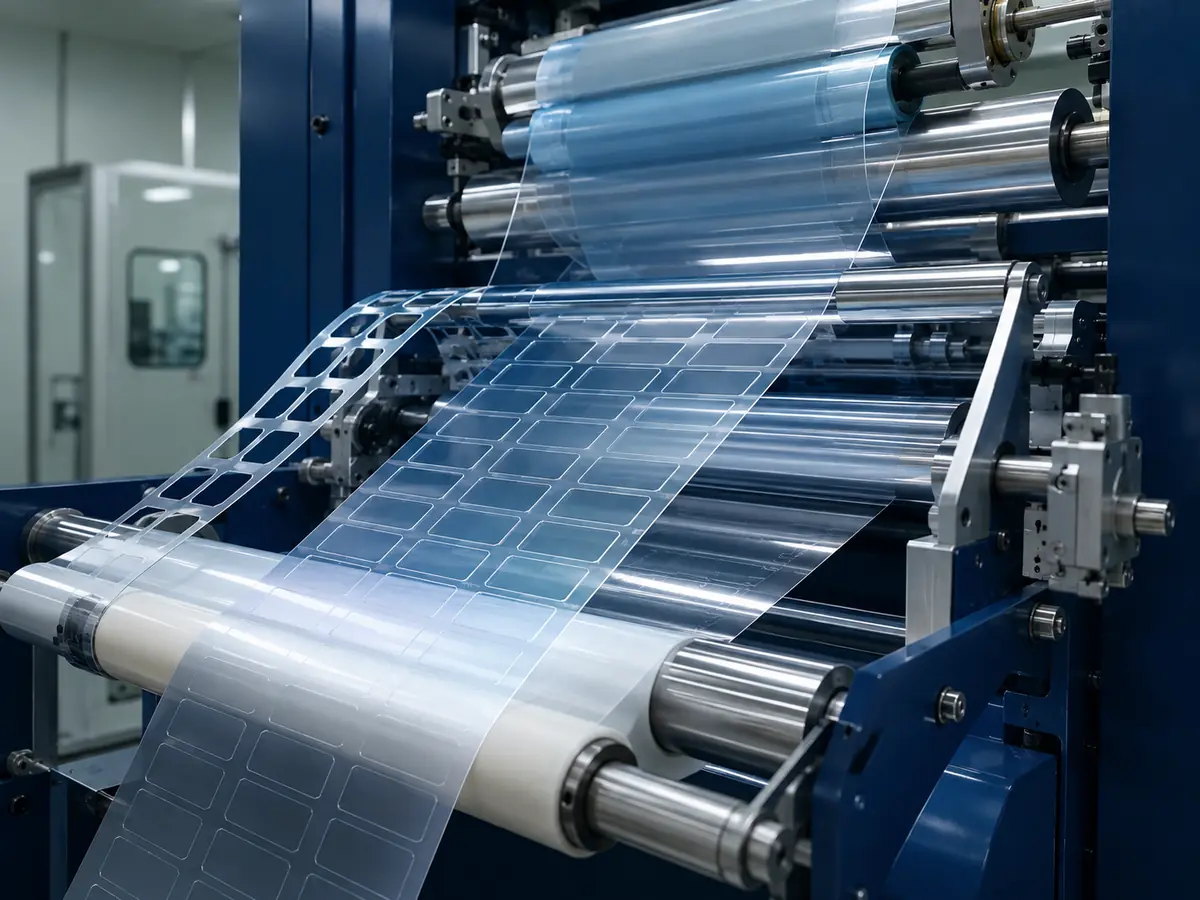
I materiali temporanei EC-OC, EC-WE e i liner ECLEAR stabilizzano l’OCA durante fustellatura, sfridatura e cambio liner senza confondere i ruoli.
Che cosa contiene la struttura del materiale.
Gli strati sono mostrati in ordine funzionale; la struttura esatta dipende dal grado.
- 01OCA master roll with controlled light/heavy liners
- 02Micro-textured or smooth PET carrier with low-tack PSA
- 03Controlled-tack PET waste-stripping film
- 04Silicone, fluorinated or silicone-free release liner matched to adhesive chemistry
Gradi identificati per la selezione tecnica.
Ogni modello ECLEAR indica un ruolo e una struttura distinti. Le corrispondenze di produzione restano controllate nell’anagrafica prodotti ECLEAR per la tracciabilità.
Temporary films control a permanent adhesive through converting.
01OCA is the permanent optical adhesive. Carriers, waste-stripping films and release liners are temporary process materials that stabilize it until the correct removal step. Confusing these roles can lead to the wrong drawing, liner sequence or customer instruction.
02During rotary or flatbed die cutting, the carrier controls dimensions and supports the soft adhesive. A waste film must lift the intended matrix without lifting finished parts. Release liners must provide a stable light/heavy relationship after dwell, storage and thermal history.
03Release force is not an intrinsic number without a method. Reference tape, roller, dwell, temperature, humidity, peel angle and speed must accompany every reported result.
Prestazioni definite in funzione dell’applicazione.
I vantaggi vengono valutati sul substrato, sul processo e sull’assieme finale previsti.
Separates permanent OCA from temporary converting materials
Supports dimensional control and clean liner exchange
Helps manage adhesive edge squeeze, particles and trapped air
Release system selected to the actual acrylic or silicone adhesive
Dalla definizione del materiale a una struttura produttiva qualificata.
La qualifica collega materiale, trasformazione e linea produttiva del cliente.
Identify OCA, light/heavy liner, carrier, waste film and the removal order.
Set web tension, lamination pressure, die depth and registration.
Balance waste pickup with part retention and clean liner exchange.
Qualify particles, edge deformation, release aging and customer handling.
Evidenze da raccogliere prima del rilascio della specifica.
Utilizzare substrati, condizioni di processo e sequenze di invecchiamento rappresentativi.
- Carrier peel and dimensional stability through the die-cut sequence
- Waste-stripping margin across web speed and stripping geometry
- Light/heavy release after dwell, heat aging and storage
- Particle, residue, silicone-transfer and static-control inspection
- OCA edge shape, bubble performance and liner orientation on the customer line
I valori richiedono un metodo e una revisione approvata.
I valori tipici guidano la selezione; i limiti controllati provengono dalla TDS approvata.
I valori tipici non sono specifiche. I limiti finali dipendono dalla TDS ECLEAR approvata e dalla validazione del cliente.
Domande degli ingegneri prima di una prova in linea.
Definire ruolo, interfacce e finestra di processo prima del campionamento.
Is EC-OC an optically clear adhesive?+
No. EC-OC identifies the OCA carrier family. EC-OA identifies permanent OCA optical adhesive. The different codes intentionally prevent a process carrier from being confused with the adhesive itself.
Can silicone release liner be used with every OCA?+
No. Acrylic and silicone adhesive systems can require different release chemistries. Fluorinated or silicone-free liners are selected only after compatibility and contamination review.
Can ECLEAR recommend a grade from an application description alone?+
A first shortlist is possible, but a production recommendation requires the substrate, layer construction, equipment, process sequence, test method and acceptance criteria. ECLEAR normally moves from requirement definition to laboratory matching, samples, line trial and a frozen approved specification.
Are the values shown on this page guaranteed specifications?+
No. Website values and constructions are selection guidance. Guaranteed limits, test conditions, packaging and shelf life are controlled only by the latest ECLEAR-approved TDS, quality agreement and customer qualification record.
Dove viene valutata questa piattaforma.
Ogni applicazione richiede comunque compatibilità dell’intera struttura e validazione in linea.
Parametri da controllare.
Registrare l’intera finestra di processo, non un solo valore nominale.
- Map every liner and process film to the exact removal step.
- Validate unwind, lamination pressure, die depth, web tension and stripping angle.
- Test release after representative dwell, aging and storage.
- Approve particles, residue, adhesive deformation and bubble performance on the customer line.
Che cosa dobbiamo sapere.
Questi dati consentono a ECLEAR di restringere il grado e il piano di validazione.
- Q1What is the OCA chemistry, thickness and original liner construction?
- Q2Which face is light release and which is heavy release?
- Q3What die-cut sequence, web speed and waste geometry are used?
- Q4What cleanliness, static-control and sheet-delivery requirements apply?
Che cosa deve rivelare subito una prova rigorosa.
I controlli precoci riducono il rischio di scala e i confronti errati tra materiali.
Confusing the permanent OCA with its temporary carrier
Waste film lifting finished parts
Release-force drift after heat or aging
Silicone transfer or contamination in a restricted process
Documenti tecnici controllati.
Richiedere la revisione corrente per il grado ECLEAR e l’applicazione selezionati.
Le strutture tipiche e i concetti applicativi sono forniti esclusivamente per la selezione del materiale. Disponibilità, struttura, prestazioni e condizioni di processo dipendono dal grado e sono soggette alla TDS ECLEAR approvata più recente, alle prove applicative e alla qualifica finale del cliente.
Sistemi di materiali correlati.
Esaminare i materiali adiacenti che interagiscono con questo prodotto nella stessa struttura o nello stesso processo.
Convalidare l’intera struttura, non un singolo materiale.
Condividere substrato, struttura, processo e criteri di accettazione per una raccomandazione mirata.