 ®
®Industrial Bonding Tapes & Adhesive Films
Consulta i modelli ECLEAR, la costruzione, le applicazioni, la finestra di processo e i requisiti di validazione di questa famiglia tecnica.
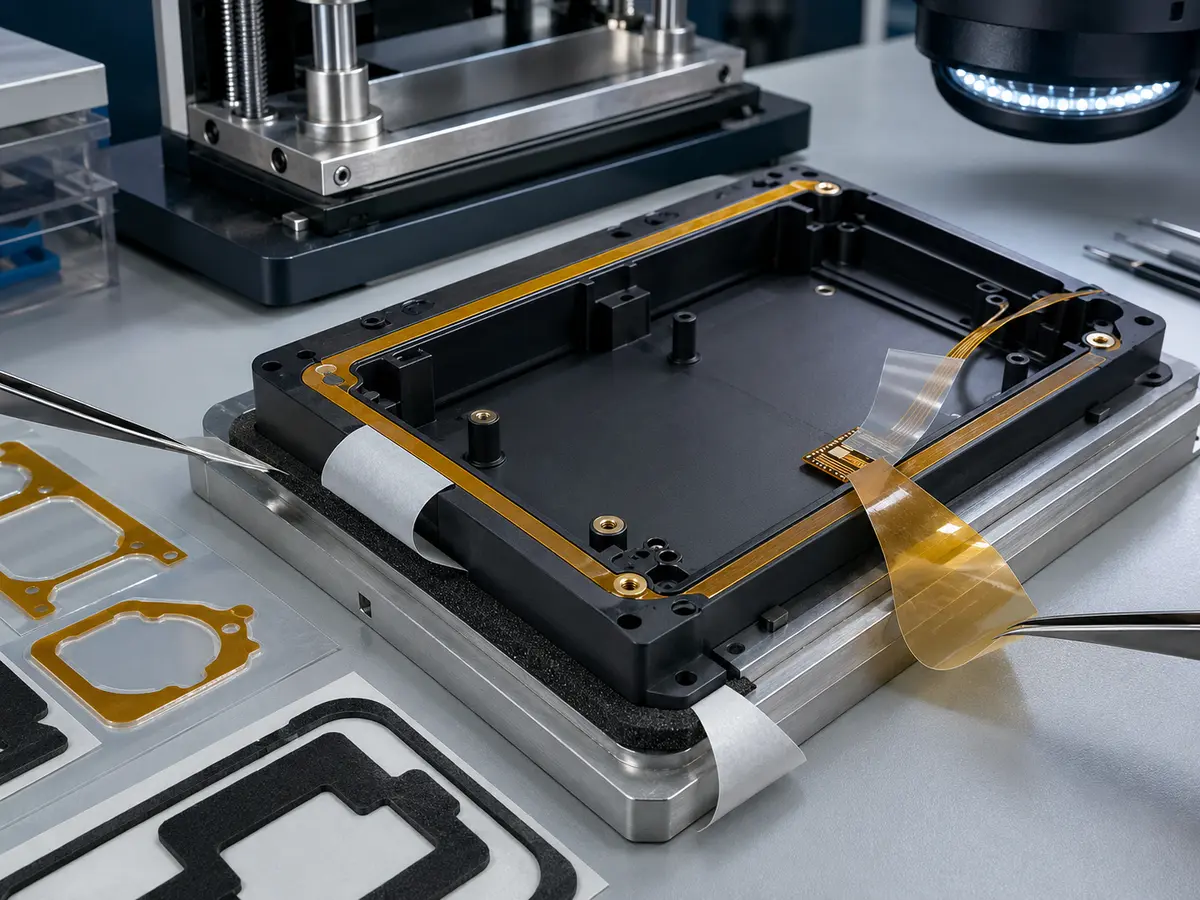
Che cosa contiene la struttura del materiale.
Gli strati sono mostrati in ordine funzionale; la struttura esatta dipende dal grado.
- 01PET, tissue, acrylic foam, PE foam, PU foam or carrierless adhesive platform
- 02Acrylic, silicone, rubber or heat-activated adhesive selected by substrate
- 03Single-, double- or differential-sided construction
- 04Paper or film release liner with controlled converting orientation
Gradi identificati per la selezione tecnica.
Ogni modello ECLEAR indica un ruolo e una struttura distinti. Le corrispondenze di produzione restano controllate nell’anagrafica prodotti ECLEAR per la tracciabilità.
Permanent bonding depends on wet-out, stress distribution and interface durability.
01PET double-sided, carrierless transfer, foam, low-surface-energy, differential and light-blocking tapes solve different assembly problems. Carrier thickness, adhesive chemistry, compressibility, color and release construction must stay linked to a specific ECLEAR grade.
02Initial tack is not the same as durable adhesion. Wet-out develops with pressure, dwell and temperature, while surface energy, contamination, plasticizers, curvature and restoring force determine the long-term interface.
03Hot-melt and thermosetting films add temperature, pressure and cure history to the bond design. The finished bondline is qualified for the actual substrate, geometry, load and environmental cycle.
Prestazioni definite in funzione dell’applicazione.
I vantaggi vengono valutati sul substrato, sul processo e sull’assieme finale previsti.
Thin carrierless tapes for conformable and curved-surface bonding
PET and LSE systems for high shear, anti-lifting and PP/PE interfaces
Foam families for cushioning, sealing, repair and foldable-device support
Differential and heat-activated constructions for dissimilar materials
Dalla definizione del materiale a una struttura produttiva qualificata.
La qualifica collega materiale, trasformazione e linea produttiva del cliente.
Record substrates, bond area, gap, load direction, thickness and rework needs.
Control cleaning, activation, primer and time before lamination.
Set pressure, dwell, alignment and any heat/cure cycle.
Verify peel, shear, creep, lifting, appearance and environmental durability.
Evidenze da raccogliere prima del rilascio della specifica.
Utilizzare substrati, condizioni di processo e sequenze di invecchiamento rappresentativi.
- Peel and dynamic/static shear on both production substrates
- Gap filling, compression recovery and edge lift on actual geometry
- High/low temperature, humidity, thermal cycling and chemical exposure
- Light-blocking, electrical or flame properties where the grade provides that function
- Reworkability, residue and damage where controlled removal is required
I valori richiedono un metodo e una revisione approvata.
I valori tipici guidano la selezione; i limiti controllati provengono dalla TDS approvata.
I valori tipici non sono specifiche. I limiti finali dipendono dalla TDS ECLEAR approvata e dalla validazione del cliente.
Domande degli ingegneri prima di una prova in linea.
Definire ruolo, interfacce e finestra di processo prima del campionamento.
Why are similar tape models kept separate?+
A one-letter or thickness change can identify a different carrier, adhesive, side construction, color, release system or application window. ECLEAR does not treat those variants as interchangeable.
Can a high peel value guarantee a reliable device bond?+
No. Peel, shear, creep, impact, gap filling, restoring force and environmental aging represent different failure modes. The joint must be tested in its real geometry.
Can ECLEAR recommend a grade from an application description alone?+
A first shortlist is possible, but a production recommendation requires the substrate, layer construction, equipment, process sequence, test method and acceptance criteria. ECLEAR normally moves from requirement definition to laboratory matching, samples, line trial and a frozen approved specification.
Are the values shown on this page guaranteed specifications?+
No. Website values and constructions are selection guidance. Guaranteed limits, test conditions, packaging and shelf life are controlled only by the latest ECLEAR-approved TDS, quality agreement and customer qualification record.
Dove viene valutata questa piattaforma.
Ogni applicazione richiede comunque compatibilità dell’intera struttura e validazione in linea.
Parametri da controllare.
Registrare l’intera finestra di processo, non un solo valore nominale.
- Identify both substrates, surface energy, roughness and contamination.
- Set die-cut geometry, liner sequence, pressure, dwell and temperature.
- Test static shear, push-out, spring-back and environmental aging on the assembly.
- Define repair or removal requirements before selecting a permanent adhesive.
Che cosa dobbiamo sapere.
Questi dati consentono a ECLEAR di restringere il grado e il piano di validazione.
- Q1Are both bonding surfaces high-energy, silicone, foam, fabric or LSE plastic?
- Q2What bondline thickness, gap filling and cushioning are required?
- Q3What shear, push-out, sealing and anti-repulsion targets apply?
- Q4Must the joint be permanent, reworkable or heat activated?
Che cosa deve rivelare subito una prova rigorosa.
I controlli precoci riducono il rischio di scala e i confronti errati tra materiali.
Selecting by peel alone while ignoring shear and spring-back
Using the wrong adhesive face in a differential construction
Poor wet-out on rough, contaminated or low-energy substrates
Uncontrolled liner changes that alter die-cut or lamination behavior
Documenti tecnici controllati.
Richiedere la revisione corrente per il grado ECLEAR e l’applicazione selezionati.
Le strutture tipiche e i concetti applicativi sono forniti esclusivamente per la selezione del materiale. Disponibilità, struttura, prestazioni e condizioni di processo dipendono dal grado e sono soggette alla TDS ECLEAR approvata più recente, alle prove applicative e alla qualifica finale del cliente.
Sistemi di materiali correlati.
Esaminare i materiali adiacenti che interagiscono con questo prodotto nella stessa struttura o nello stesso processo.
Convalidare l’intera struttura, non un singolo materiale.
Condividere substrato, struttura, processo e criteri di accettazione per una raccomandazione mirata.